

Understanding soft water vs hard water starts with knowing what’s actually dissolved in your water supply.
Direct Answer: The difference between soft water and hard water comes down to mineral content. Hard water contains high levels of dissolved calcium and magnesium, which can leave scale buildup on pipes and appliances, while soft water has these minerals reduced or removed, resulting in a smoother feel but sometimes a different taste.
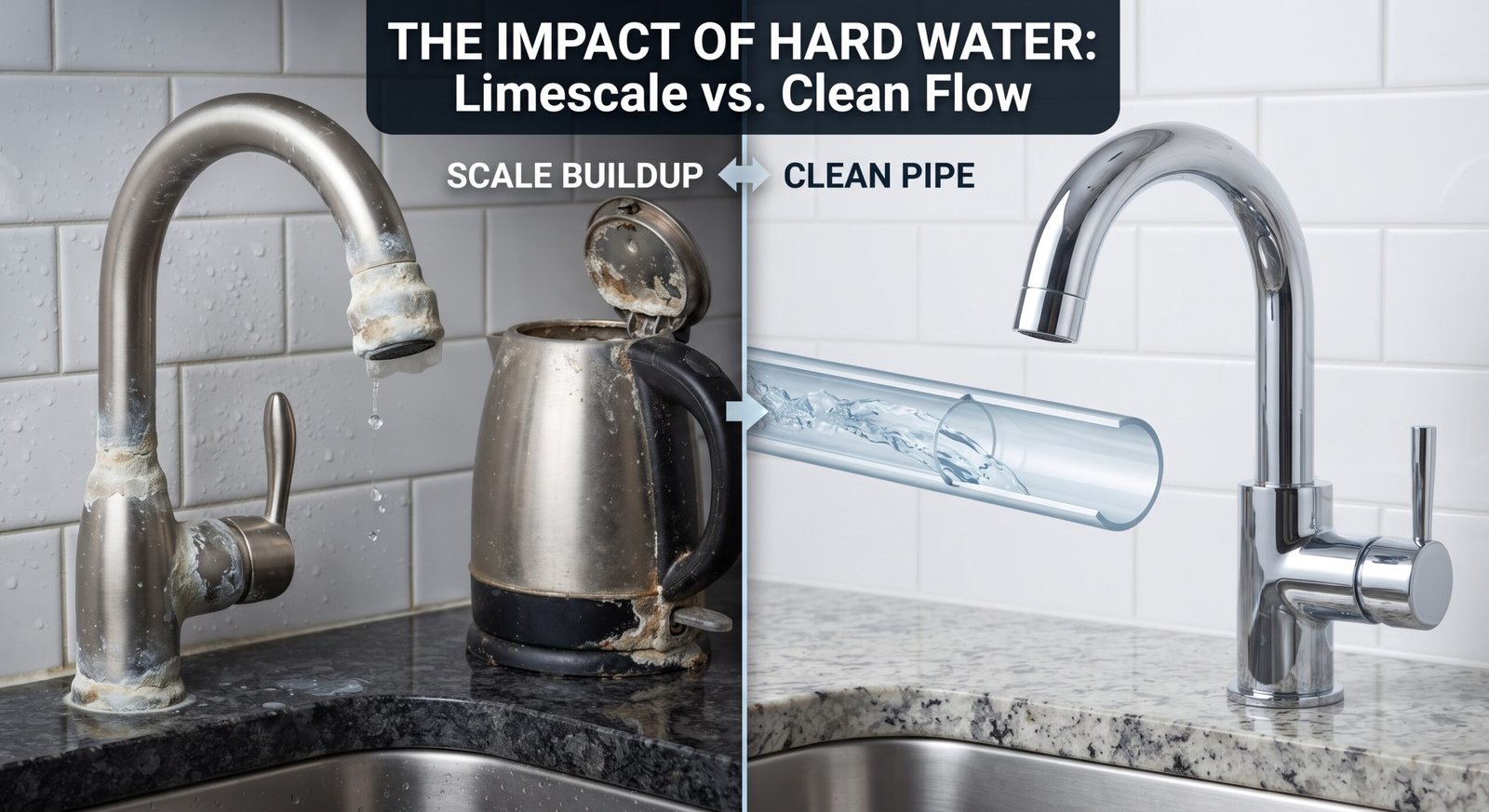
If you’ve noticed white scale on your kettle, soap that won’t lather easily, or spots on dishes after washing, hard water is often the reason — and understanding soft water vs hard water helps explain why.
What Is Hard Water?
Understanding soft water vs hard water is only half the picture — knowing how to treat hard water matters just as much., Hard water forms when water passes through soil and rock containing limestone or chalk, picking up dissolved calcium and magnesium along the way. It’s extremely common in groundwater and borewell sources, including many areas with the kind of deep groundwater common across Multan.
Common signs of hard water:
- White, chalky scale buildup on taps, kettles, and pipes
- Soap and shampoo that don’t lather well
- Spots or film left on dishes and glassware
- A stiff feeling in laundry and reduced fabric softness over time
What Is Soft Water?
Soft water has low levels of calcium and magnesium, either naturally or through a treatment process that removes them. It lathers more easily with soap, leaves less scale buildup, and is generally gentler on plumbing and appliances over the long term.
Soft Water vs Hard Water: Key Differences
| Factor | Hard Water | Soft Water |
|---|---|---|
| Mineral Content | High calcium & magnesium | Low calcium & magnesium |
| Scale Buildup | Common on pipes & appliances | Minimal |
| Soap Lathering | Poor | Better |
| Taste | Often described as heavier | Often described as smoother |
| Appliance Lifespan | Can shorten due to scale | Generally longer |
Does Hard Water Affect Health?
Hard water itself isn’t considered directly harmful to drink in moderate amounts — in fact, the calcium and magnesium it contains are essential minerals. The bigger concerns with hard water are practical: appliance damage, reduced soap efficiency, and mineral buildup in pipes over time. That said, extremely high mineral concentrations (well beyond typical hardness) can affect taste and may warrant treatment.
How Is Hard Water Treated?
Reducing water hardness typically involves one of two approaches:
- Ion exchange softening — swaps calcium and magnesium ions for sodium, commonly used in dedicated water softener systems.
- RO filtration with controlled remineralization — removes hardness minerals along with other contaminants through reverse osmosis, then reintroduces a balanced, controlled mineral profile afterward rather than leaving water either overly hard or completely stripped.
This second approach is particularly relevant in areas with high-TDS groundwater, where the goal isn’t just softening but overall purification alongside hardness reduction.
According to WHO guidance on water hardness, while hardness is primarily an aesthetic and practical concern rather than a direct health risk, very hard water sources should still be monitored as part of overall water quality management.
Frequently Asked Questions
Is hard water bad for you? Hard water isn’t considered directly harmful in typical concentrations — calcium and magnesium are essential minerals. The main issues with hard water are practical, like appliance scale buildup and reduced soap efficiency, not health risks.
How do I know if I have hard water? Common signs include white scale on kettles and taps, soap that doesn’t lather well, spots on dishes after washing, and stiff-feeling laundry. A water hardness test can confirm exact mineral levels.
Can RO filtration fix hard water? When comparing soft water vs hard water treatment options, RO filtration is one of the most effective approaches. Reverse osmosis removes calcium and magnesium along with other contaminants, and when paired with controlled remineralization, it addresses hardness while still delivering a balanced mineral profile rather than completely mineral-free water.
Is soft water safe to drink? In the soft water vs hard water debate, soft water is generally considered safe to drink. Yes, soft water is generally safe to drink. The main consideration is that very low mineral content can taste different from what people are used to, but it poses no inherent safety concern.