

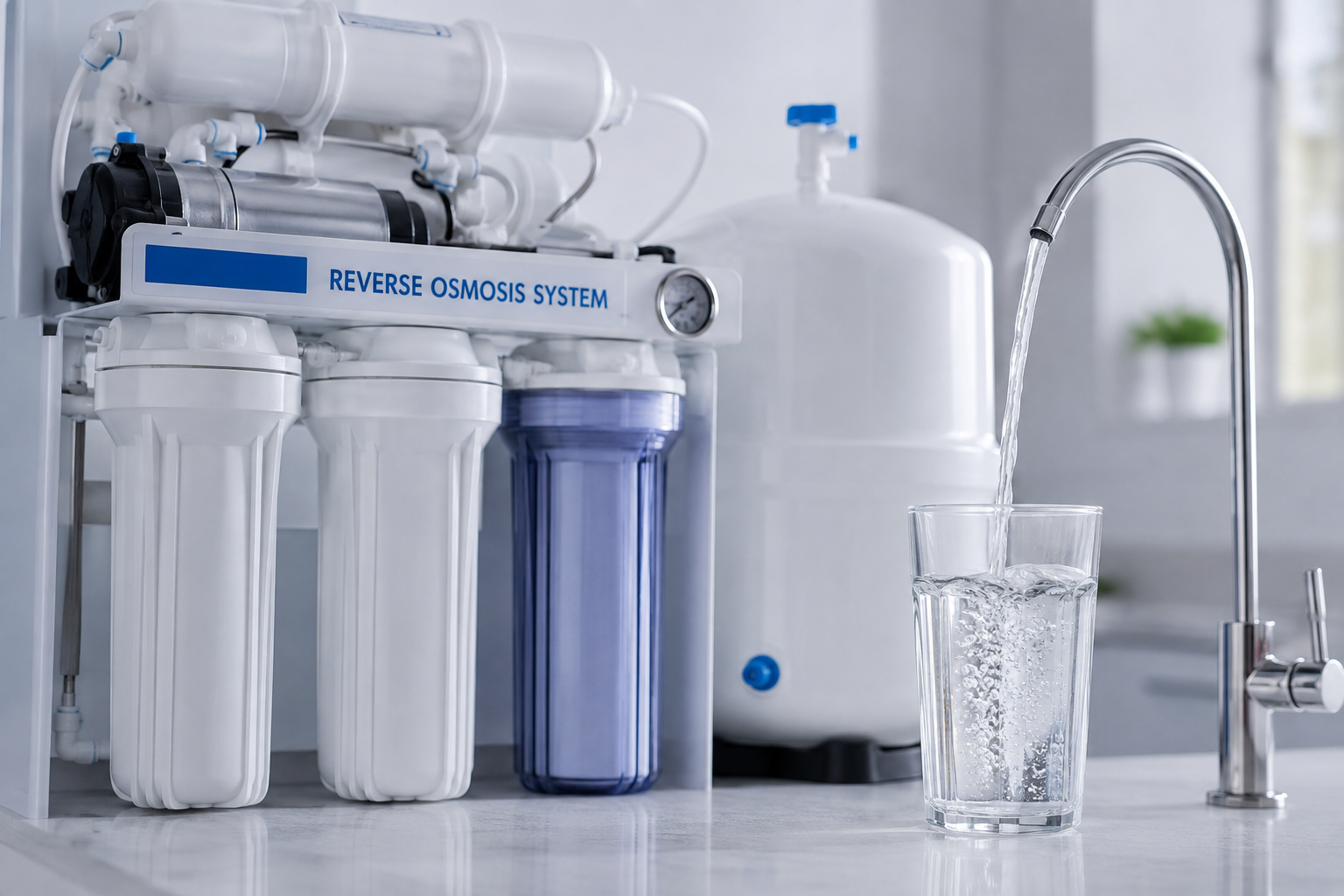
Direct Answer: Distilled water is water that has been boiled into vapor and then condensed back into liquid, leaving behind minerals, salts, and most contaminants in the process. It’s different from RO (Reverse Osmosis) water, which uses membrane filtration under pressure instead of heat — both remove most minerals, but through entirely different methods, with different practical trade-offs for everyday drinking water.
Understanding what distilled water actually is helps clear up a common mix-up — many people assume water and purified water are the same thing, when the process behind each is quite different.
How Is Distilled Water Made?
Distillation works by heating water until it evaporates, then cooling and collecting the vapor as it condenses back into liquid form. Since minerals, salts, and most contaminants don’t evaporate along with the water, they’re left behind in the original container — resulting in water that’s extremely pure but also stripped of virtually all dissolved minerals.
Distilled Water vs. RO Water: What’s the Difference?
| Factor | Distilled Water | RO Water |
|---|---|---|
| Process | Heat-based evaporation | Pressure-based membrane filtration |
| Mineral content | Virtually none | Removed, then often reintroduced |
| Energy use | Higher (requires boiling) | Lower (no heating needed) |
| Common use | Lab equipment, appliances, medical use | Everyday drinking water |
| Taste | Often described as flat | Depends on remineralization |
Is Distilled Water Safe to Drink?
This water is safe to drink in the short term, but it isn’t typically recommended as a sole daily drinking source over the long run. Since it contains no minerals at all, it doesn’t contribute to daily calcium, magnesium, or other mineral intake the way water with a balanced mineral profile does — and some people find its taste noticeably flat compared to remineralized water.
What Is Distilled Water Actually Used For?
This water’s main advantage is its extreme purity, which makes it ideal for uses where mineral content could cause problems:
- Medical equipment — CPAP machines and humidifiers, where mineral deposits could damage components
- Laboratory use — testing and experiments requiring mineral-free water
- Car batteries and cooling systems — where mineral buildup can cause corrosion
- Steam irons — to prevent mineral scale from clogging vents
For everyday drinking, most people are better served by water that’s been purified and then remineralized in controlled amounts — rather than water with zero minerals at all.
Distilled Water vs. Purified Water: A Common Mix-Up
“Purified water” is a broader term covering any process that removes contaminants — including distillation, RO filtration, or carbon filtration. this water is technically one type of purified water, but not all purified water is distilled. This distinction matters because “purified” doesn’t tell you whether minerals were removed and left out, or removed and reintroduced afterward.
Frequently Asked Questions
Is this water the same as purified water? Not exactly. This water is one specific type of purified water made through evaporation and condensation, while “purified water” broadly covers any method — including RO filtration — that removes contaminants.
Can I drink distilled water every day? Occasional drinking is fine, but relying on this water as your sole daily source isn’t ideal long-term, since it lacks the minerals like calcium and magnesium that water normally contributes to your diet.
Why does distilled water taste different? this water lacks the minerals that give water its typical taste, which is why many people describe it as flat or bland compared to water with a balanced mineral profile.
Is this water better than RO water? Neither is universally “better” — they serve different purposes. This water is ideal for appliances and medical equipment requiring mineral-free water, while RO water (especially when remineralized) is generally more practical and better-tasting for everyday drinking.