

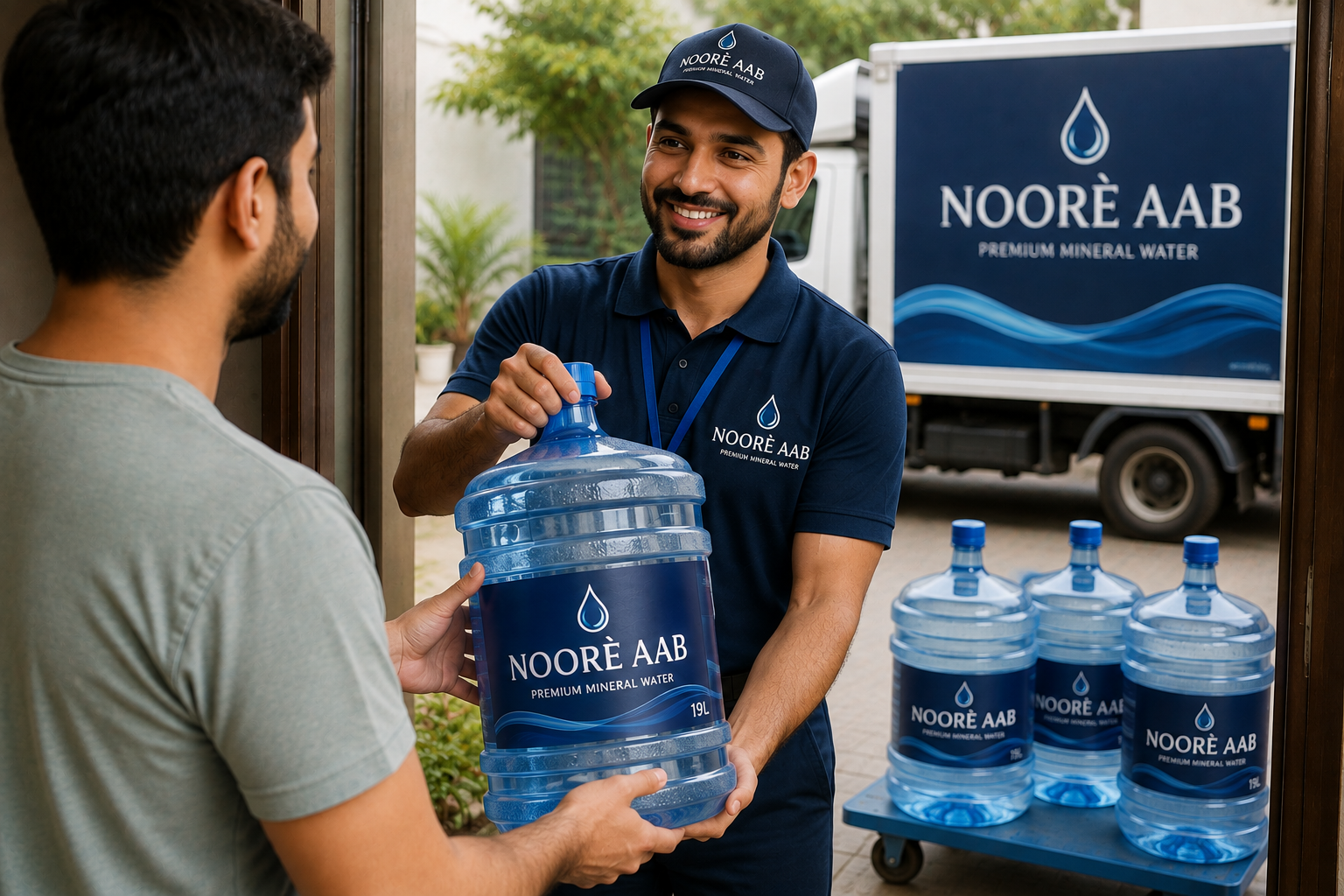
If you’re considering water delivery for your home or office, it helps to understand exactly how the process works before you commit to a provider.
Direct Answer: Water delivery typically works through a subscription or on-demand model — you order bottles (commonly 19-liter containers) online or by phone, the provider fills and delivers them on a set schedule, and empty bottles are picked up and refilled for the next cycle. The quality of water delivery service depends heavily on the purification process behind it, how bottles are sanitized between refills, and how consistently the schedule is maintained.
How Water Delivery Actually Works, Step by Step
1. Placing an Order
Most water delivery services let you order through a phone call, WhatsApp, website, or app. You typically choose bottle size (commonly 19L for homes and offices) and delivery frequency — one-time, weekly, or a recurring subscription.
2. Purification and Bottle Preparation
Before refilling, quality providers put water through a multi-stage purification process and thoroughly sanitize bottles to prevent contamination between uses. This step is where water delivery services differ the most — a provider’s process determines whether you’re getting consistently safe water or not.
3. Scheduled Delivery
Water is delivered to your doorstep or office on the agreed schedule. Reliable providers maintain consistent delivery windows so you’re never left without water.
4. Empty Bottle Pickup and Refill Cycle
Empty bottles are collected on the next delivery and sent back for cleaning and refilling, creating a continuous supply cycle without you needing to reorder each time.
What to Look For in a Water Delivery Service
Not all water delivery services offer the same quality. Before choosing a provider, check for:
- Purification method: Ask specifically how the water is treated — basic filtration, RO only, or a multi-stage process (RO + UV + Ozone) that addresses both contaminants and taste.
- Bottle hygiene: Bottles should be properly sanitized between refills, not just rinsed.
- Consistent testing: Regular lab testing is a better trust signal than a one-time claim, since water quality can vary batch to batch without ongoing checks.
- Delivery reliability: Ask about typical delivery windows and how missed deliveries are handled.
How Noorè Aab Approaches This
Why Purification Quality Matters More Than the Bottle
Two providers can deliver the same size bottle, but the water inside can be very different. This is the same distinction covered when comparing tap water safety and different types of drinking water — the delivery format is just packaging; what actually determines safety and taste is the purification process behind it.
According to the World Health Organization’s drinking water guidelines, regular water quality monitoring is essential regardless of the delivery method, since contamination risks can occur at any stage between source and consumption.
Frequently Asked Questions
How often should water delivery happen?
This depends on household or office consumption, but weekly or bi-weekly delivery is common for regular households, while offices often need more frequent scheduling based on staff size.
Is delivered water safer than tap water?
It can be, if the provider uses thorough purification and proper bottle hygiene — but quality varies by provider. Always ask about the purification process rather than assuming all delivered water is equally treated.
What size water bottles are used for delivery?
19-liter bottles are the most common size for home and office water delivery, though smaller options are also available for individual use.
Do water delivery bottles get properly cleaned between refills?
Reputable providers sanitize bottles before every refill to prevent contamination. It’s worth asking your provider directly about their bottle-cleaning process before subscribing.
Is water delivery available in Multan?