

If you’ve ever wondered which water is best for drinking, the answer depends on more than just the label on the bottle.
Direct Answer: There’s no single “best” water type for everyone — the right choice depends on your local water quality, health needs, and how the water is treated. However, water that combines thorough contaminant removal with balanced mineral content — such as RO-purified water treated with UV and ozone, then remineralized — generally offers the most consistent safety and taste compared to plain tap water, basic filtered water, or untreated natural sources.
Choosing the “best” drinking water isn’t about picking a trendy label — it’s about understanding what each type of water actually offers, and what it doesn’t.
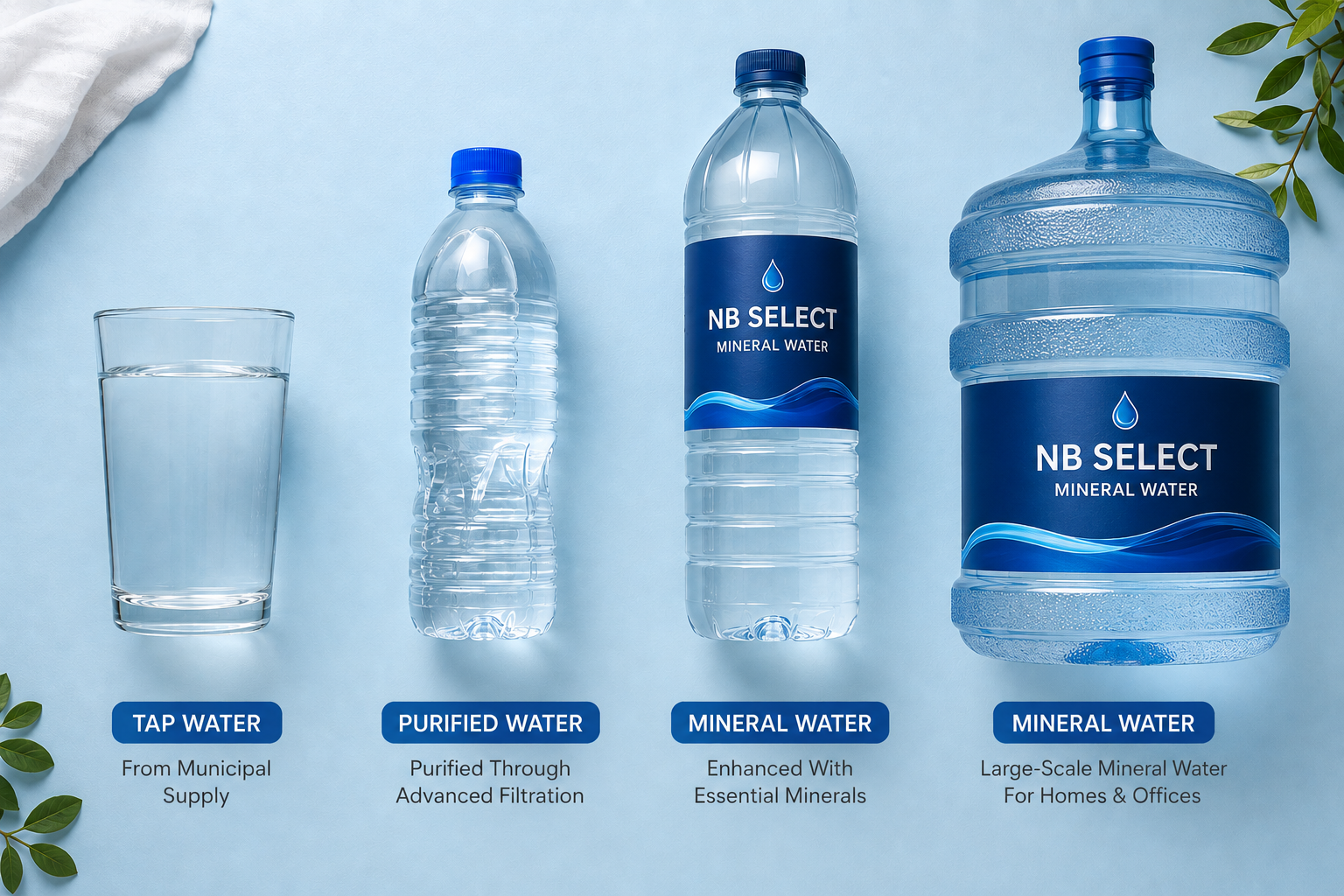
Comparing the Main Types of Drinking Water
Tap Water
Delivered through municipal supply with basic treatment. Convenient and low-cost, but quality varies significantly depending on local infrastructure, pipe condition, and treatment consistency. Chlorine residue, sediment, and occasional contamination are common concerns.
Mineral Water
Naturally sourced from a protected underground spring with its own inherent mineral profile. Quality and consistency vary by brand and source — not all commercially available “mineral water” maintains rigorous testing standards.
Basic Filtered Water
Passed through simple filters (carbon filters, basic RO units) to remove common contaminants. Effective for reducing chlorine and sediment, but many basic systems also strip out beneficial minerals, which is why plain filtered water can taste flat.
Multi-Stage Purified Water (RO + UV + Ozone)
Combines reverse osmosis filtration with UV disinfection and ozone treatment, followed by controlled remineralization. This layered approach addresses the two biggest gaps in the options above: broader contaminant removal (beyond what basic filtration or tap treatment covers) and restored mineral balance (unlike plain RO water).
What Drinking Water Quality Standards Actually Mean
Regardless of the source — tap, bottled, mineral, or purified — water quality is typically judged against a few key benchmarks:
- Contaminant levels: Absence of harmful bacteria, heavy metals, and chemical residues.
- TDS (Total Dissolved Solids): A balanced range indicates neither overly stripped nor overly mineral-heavy water.
- Consistent lab testing: Regular verification, not a one-time certification, is what actually ensures ongoing safety.
“TDS (Total Dissolved Solids)”
So, Which Water is Best for Drinking?
For most households, the safest and most consistent daily choice is water that has gone through comprehensive purification (removing what tap water often can’t) and controlled remineralization (avoiding the flat taste of basic filtration). This is why many households are shifting away from relying solely on tap water or basic filters toward multi-stage purified water delivery.
Frequently Asked Questions
What is the healthiest water to drink daily? Water that is free of contaminants and contains a balanced mineral profile is generally considered the healthiest choice for daily drinking — regardless of whether it comes from a natural mineral source or a well-managed purification process.
What are drinking water quality standards based on? Drinking water quality is typically assessed on contaminant levels, Total Dissolved Solids (TDS), and consistent lab testing — not simply on whether water is labeled “mineral,” “filtered,” or “purified.”
Is purified water better than mineral water? They serve different purposes. Purified water (especially multi-stage RO, UV, and ozone treated water) offers consistent contaminant removal regardless of source water quality, while natural mineral water offers a fixed mineral profile tied to its spring source. Both can be safe when properly tested.
Is bottled water always better than tap water? Not necessarily. Bottled water quality varies by brand, and some bottled water is simply treated tap water. What matters is the treatment process and testing behind it, not the packaging.