

Quick Answer: To increase your daily water intake, anchor drinking to existing habits (waking up, meals), keep water visibly accessible, use a marked bottle to track volume, add natural flavor if plain water feels unappealing, and choose clean, great-tasting filtered water — since poor-tasting water is one of the biggest hidden reasons people under-hydrate.
Many people struggle to meet their daily hydration goals simply because drinking plain water feels like a chore. Relying on willpower alone rarely works — you need a system, not motivation.
Why You Fall Short on Daily Water
Most people don’t hydrate adequately because they wait until they feel thirsty. Thirst is a lagging signal — by the time it kicks in, mild dehydration has often already set in, which is commonly linked to fatigue, headaches, and reduced concentration. Relying on a vague mental checklist doesn’t work — sustainable hydration needs a deliberate, system-based approach, not just willpower.
5 Practical Ways to Increase Your Water Intake
1. Anchor Hydration to Daily Habits
Drink a full glass of water immediately after waking up, another before lunch, and one before dinner. Tying water consumption to routines you already follow (habit stacking) builds consistency automatically, without needing to “remember.”
2. Flavor It Naturally
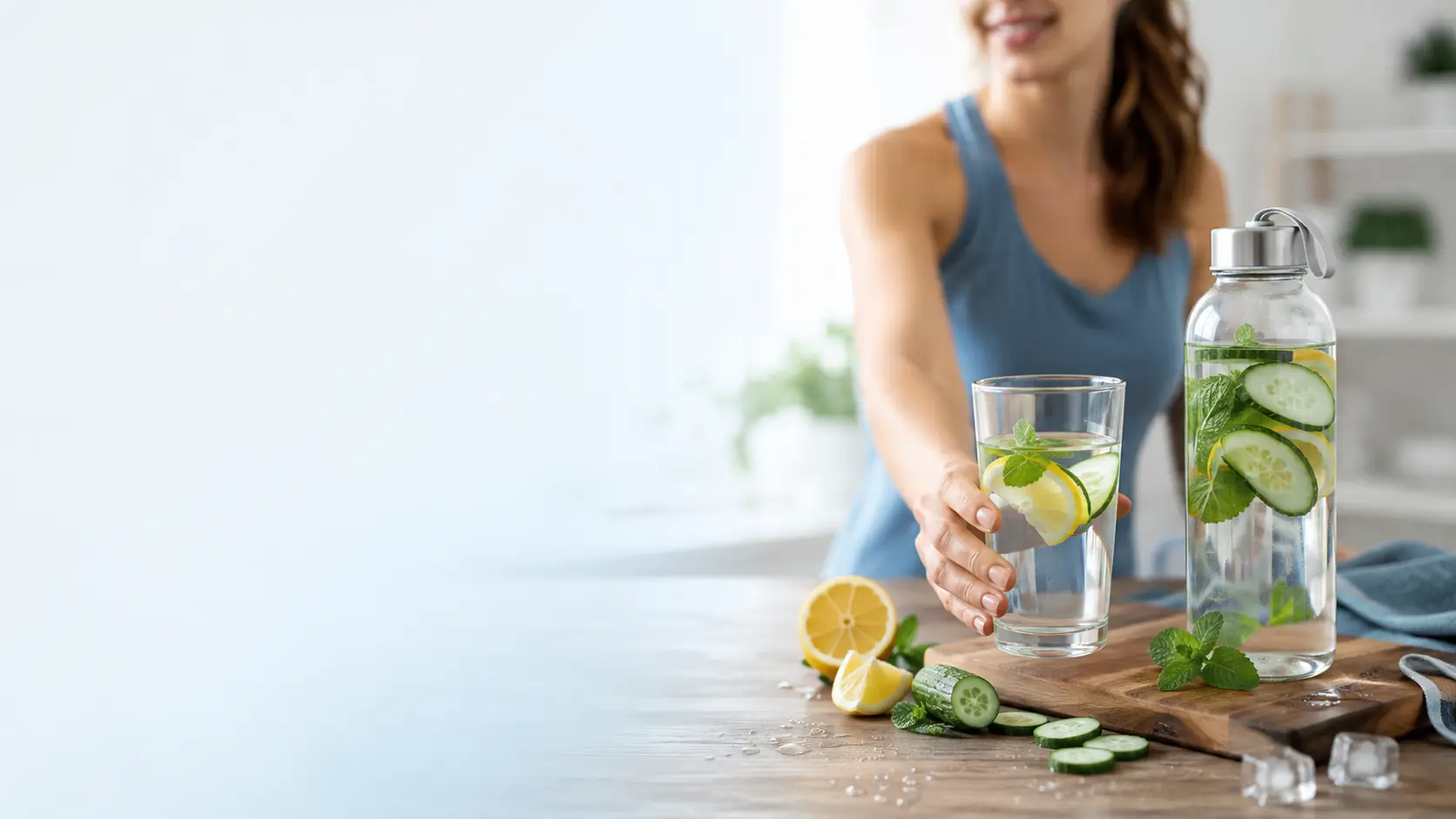
If plain water feels unappealing, infuse it with lemon slices, cucumber, or mint leaves. Avoid commercial flavored waters — many are loaded with hidden sugars and artificial additives that work against your health goals.
3. Keep Water Visually Accessible
Place a filled bottle or container directly on your desk or workstation. Hydration habits follow visibility — if water is out of sight, it’s out of mind.
4. Use a Tracked Container
Instead of guessing your intake, use a bottle with clear volume markings so you can track progress hour by hour and close the gap by evening.
5. Prioritize Water Quality
Water that tastes harsh, metallic, or heavily chlorinated discourages consumption — even people trying to hydrate more often quietly quit because the water itself is unpleasant to drink. Clean, crisp, filtered water tastes noticeably better, which makes it far easier to consistently hit your daily intake target.
Why Water Quality Affects How Much You Drink
Drinking large volumes of water is less effective if the water itself tastes unpleasant or feels harsh going down — this is one of the most overlooked reasons people quietly give up on hydration goals. Water that goes through thorough filtration and is checked through regular lab testing tends to taste noticeably cleaner and crisper, which removes the biggest hidden barrier to consistent daily intake.
Frequently Asked Questions
How much water should I drink daily?
Daily water needs vary by body weight, activity level, and climate, but a commonly cited general guideline is around 8 glasses (about 2 liters) per day for most adults, with higher needs in hot climates or during physical activity.
What’s the easiest way to remember to drink water?
Habit stacking — attaching water intake to actions you already do daily (waking up, meals, work breaks) — is more reliable than relying on memory or willpower alone.
Does water quality actually affect how much I drink?
Yes. Taste is a major behavioral factor — people naturally drink more of water that tastes clean and fresh, and less of water that tastes chemically treated or metallic.